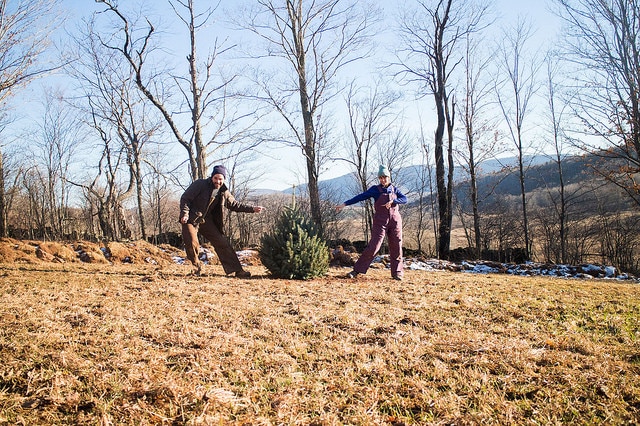
A New Tradition Blooms: Our P+M Upstate Adventure to Plant a Christmas Tree
There's something uniquely magical about the holiday season, but what if that magic could extend far beyond December 25th, growing roots deep into the earth and into your family's history? This past Christmas, we embarked on a heartwarming new tradition, one that promises not just a festive centerpiece for a few weeks, but a living, breathing legacy for our Upstate New York land: planting our very own Christmas tree. Imagine, years from now, walking through a growing family of evergreens, each one a testament to cherished holiday memories. That’s the dream behind our pm upstate adventure planting our christmas tree - Article 1 journey.
Our hope is to repeat this tradition year after year, building a verdant chronicle of holidays past, each tree adding to a beautiful, memory-laden landscape. This year, the adventure began long before the lights were strung.
From Long Island Nursery to Upstate Home: Finding Our Colorado Blue Spruce
The quest for the perfect live Christmas tree began with determination, and a fair bit of searching. While many dream of finding a picturesque farm in Upstate New York, offering hot cocoa and festive carols amidst rows of Fraser Firs, our specific mission required a more targeted approach. We weren't just looking for any tree; we needed a live tree, complete with its intact root ball, ready for a second life in the soil. After numerous calls to various farms yielded no success, our persistence paid off when we discovered a nursery in Long Island specializing in exactly what we needed: magnificent Colorado Blue Spruce trees.
The drive was well worth it. There's a special joy in selecting a tree that you know will become a permanent fixture on your property. We carefully chose our favorite, a vibrant Colorado Blue Spruce, and gently loaded him (yes, we refer to our trees as "him"!) into our surprisingly capable car. It's truly amazing what a small vehicle can carry when you're driven by holiday spirit and a grand vision! This initial step set the stage for our unique pm upstate adventure planting our christmas tree - Article 2 – bringing our future forest guardian home.
Bringing the Holiday Spirit Indoors (With a Plan!)
Once our chosen spruce arrived, he became the undisputed star of our holiday celebrations. For a few weeks, he graced our home, beautifully adorned with ornaments and twinkling lights. It was a magical sight, especially with our cats often found napping peacefully at his base, perhaps sensing the life within. This period, while joyful, also required careful management. Keeping a live tree indoors for an extended period, especially in a heated home, can be tricky. We made sure to keep him well-watered, but never soggy, ensuring his root ball remained moist. Ideally, a live tree should only be kept indoors for about a week to minimize stress, but sometimes, holiday magic requires a little extra time. If you plan to keep your tree longer, try to maintain cooler indoor temperatures and keep him away from direct heat sources.
Beyond the Baubles: The Vital Steps for a Successful Christmas Tree Transplant
The transition from indoor splendor to outdoor permanence is perhaps the most critical phase of planting a live Christmas tree, especially in a climate like Upstate New York. Just a few days after Christmas, with the holiday cheer still lingering, we began the meticulous process of preparing our spruce for his ultimate destination. This involved a crucial step known as hardening off.
The Art of Hardening Off: A Gentle Transition
Imagine being whisked from a cozy, warm home into the biting chill of an Upstate New York winter. That's essentially what our tree would experience without proper acclimatization. The drastic temperature difference between a heated indoor environment (often 68-75°F) and the freezing outdoor temperatures (potentially 30-35°F or lower) can be a fatal shock to a tree. To prevent this, we initiated the hardening-off process. We carefully wrapped our tree and moved him to a sheltered, unheated space – the stairwell of our roof. Here, he spent five days gradually adjusting to cooler temperatures, preparing his systems for the impending outdoor environment. This gradual exposure allows the tree to physiologically adapt, reducing transplant shock and significantly increasing its chances of survival. It’s a testament to the fact that patience and foresight are key when nurturing new life.
The Big Move Upstate and the Planting Ceremony
After his five-day stint in the stairwell, our little Colorado Blue Spruce was ready for the next leg of his journey: the trip upstate to his forever home. We loaded him back into the car, and one can only imagine the tree’s confusion with all the travel! From a nursery in Long Island, to a festive living room, to a chilly stairwell, and now a car ride to a "desolate" location. We might have even wondered if he was nervous seeing us dig a large hole!
Thankfully, the story is a happy one. We chose a suitable spot on our land, a location where he would thrive. Digging the hole presented a small challenge; the top layer of grass was somewhat frozen, but thankfully, the soil beneath was workable. A crucial tip for anyone planning a similar winter planting: if you anticipate frozen ground, dig your hole in advance! This foresight can save you a lot of effort and ensure a timely planting. We ensured the hole was wide enough for the root ball and deep enough for the tree to sit at the same level it was in the container. Once he was carefully placed, the next vital step was watering. Matthew, with true "hulk" strength, carried buckets of water from a nearby stream all the way up the hill to give our new arrival a thorough drink, settling the soil around his roots.
Nurturing a Legacy: Our Vision for a Family Forest
There's always a touch of apprehension when transplanting a living organism, especially one moving into the harsh Upstate New York winter. We naturally harbored a small fear that he might not make it, but we remain hopeful and will be eagerly watching for signs of growth in the coming months. It gets incredibly cold up here, so we truly hope the hardening-off process and careful planting minimized the shock.
This single Colorado Blue Spruce is just the beginning of a much grander vision. In the spring, we plan to acquire and plant a multitude of pine trees along the border of our property. These evergreens will eventually provide a year-round green screen, replacing some of the less "easy on the eyes" deciduous trees that shed their leaves in winter, leaving a bare, stark landscape. These new pine trees, we've decided, will become the "Brothers of our Christmas trees," forming a growing, interconnected family forest, each tree a symbol of a cherished memory and a commitment to nurturing our land for generations to come. It’s an investment in beauty, ecology, and deeply personal family history.
Your Comprehensive Guide to Planting a Live Christmas Tree Successfully
Inspired by our P+M Upstate Adventure, here’s a detailed guide to help you successfully plant your own live Christmas tree and start your family forest:
- Source Your Tree Wisely:
- Look for a local farm or nursery that sells live trees with their root ball still attached and wrapped in burlap or a container. This is non-negotiable for successful transplanting.
- Inquire about the tree species best suited for your local climate and soil conditions. Colorado Blue Spruce, Fraser Fir, and Douglas Fir are popular choices, but local nurseries can advise on hardiness zones.
- Indoor Care: Keep it Short and Cool:
- Container & Water: Once home, immediately place the root ball in a large bucket or tub. Keep the soil consistently moist, but never waterlogged. Overwatering can lead to root rot.
- Temperature Control: The ideal indoor stay is one week maximum. If you must keep it longer, aim for the coolest possible room in your house. Avoid placing the tree near heat registers, fireplaces, or sunny windows. A sudden shift from a 75°F house to a 35°F outdoors is often fatal.
- Monitor: Check the soil moisture daily. A dry root ball is a dead root ball.
- Harden Off Your Tree: The Crucial Transition:
- Once the holidays are over, begin the hardening-off process. This is vital to prevent temperature shock.
- Gradual Exposure: Move your tree to an intermediate, unheated space for 5-7 days. This could be a garage, an enclosed porch, a cool basement, or an unheated shed. The goal is to slowly expose it to colder temperatures, allowing it to acclimate before facing the full outdoor elements.
- Continue Watering: Even in colder, unheated spaces, the tree still needs water, albeit less frequently.
- Site Selection and Hole Preparation:
- Choose Wisely: Select a planting site with adequate sunlight (most evergreens prefer full sun) and well-draining soil. Consider the mature size of the tree and its eventual root system.
- Dig in Advance: If planting in winter, dig your hole before the ground freezes solid. The hole should be 2-3 times wider than the root ball and just as deep. This allows roots to spread easily into loose soil.
- Soil Amendment (Optional): If your soil is poor, you can amend the excavated soil with some compost, but avoid making the hole like a "bathtub" that traps water.
- Planting Day:
- Careful Placement: Gently place the tree in the center of the hole. The top of the root ball should be level with, or slightly above, the surrounding grade to account for settling.
- Remove Burlap/Container: If the root ball is wrapped in burlap, carefully cut it away from the top and sides, tucking any remaining burlap under the root ball. For plastic containers, remove the tree completely.
- Backfill: Carefully backfill the hole with the excavated soil, gently tamping it down to remove large air pockets.
- Water Thoroughly: Water deeply immediately after planting. This helps settle the soil around the roots and eliminates any remaining air pockets.
- Mulch: Apply a 2-4 inch layer of organic mulch (wood chips, pine needles) around the base of the tree, keeping it a few inches away from the trunk. Mulch helps retain moisture, regulate soil temperature, and suppress weeds.
- Post-Planting Care:
- Winter Watering: If you experience dry spells during winter and the ground isn't frozen, provide supplemental water. Young trees need consistent moisture.
- Protection: Consider protecting young trees from deer or rodent damage with tree guards or fencing.
- Patience: Give your tree time to establish. It may take a season or two for it to truly settle in and show vigorous growth.
Our P+M Upstate Adventure of planting our Christmas tree has been more than just a holiday project; it's an investment in memories, a commitment to our land, and the joyous beginning of a beautiful, living tradition. We eagerly await the spring to see how our Colorado Blue Spruce fares and to continue expanding our very own family forest, one cherished Christmas tree at a time. Here’s to traditions that grow!
