The P+M Upstate Adventure: Cultivating a Christmas Tradition, One Tree at a Time
There’s something uniquely enchanting about a Christmas tree, a beacon of festive cheer that transforms a house into a home. But for us, P+M, the annual Christmas tree ritual has evolved into something far more profound: a living tradition, a sustainable pledge, and a truly special `pm upstate adventure planting our christmas tree` on our beloved land. This year marked the inception of a new family custom – choosing a live tree, celebrating with it through the holidays, and then giving it a permanent home, watching our own living forest grow, memory by memory.
The Quest for Our Living Christmas Tree: A New Family Tradition Takes Root
Our vision was clear: to cultivate a family of trees that would stand as beautiful, living monuments to our Christmases past. This wasn't just about decoration; it was about connection – connecting with nature, with our land, and with the enduring spirit of the season. The journey began with a hunt for the perfect candidate. After striking out with numerous local farms, the search led us to a nursery in Long Island that offered exactly what we needed: magnificent Colorado Blue Spruce trees, complete with their vital root balls intact.
The trip to the nursery was an adventure in itself. We envisioned a bustling, festive atmosphere, and that's precisely what we found. Kids, including our own little Lily, were brimming with excitement, darting between rows of fragrant evergreens. The air hummed with distant carols and the sweet, crisp scent of pine. We spent a good hour wandering, comparing stately Fraser Firs with lush Douglas Firs, but it was the majestic Colorado Blue Spruce that captured our hearts. Its vibrant blue-green needles and robust form just *felt* right. Lily, in particular, was captivated, her tiny fingers tracing the rough bark, already staking her claim on "our tree." The selection process was filled with laughter, hot cocoa, and the simple joy of creating a new memory.
Once chosen, our new evergreen companion was carefully loaded into our "little car" – a vehicle that, despite its size, has become quite the seasoned traveler, carrying countless treasures and memories on our Upstate adventures. Bringing him home, nestled securely for the ride, was the first step in this grand new tradition.
Nurturing Our Evergreen: From Living Room Star to Upstate Pioneer
Back at home, our chosen Colorado Blue Spruce quickly became the centerpiece of our holiday celebrations. For several weeks, he stood proudly in our living room, adorned with lights and ornaments, absorbing the warmth and joy of Christmas. Our cats, ever the connoisseurs of comfort, found his lower branches to be the perfect spot for a cozy nap, adding another layer of charm to his temporary abode. This period, while delightful, was also a careful balancing act, as keeping a live tree indoors for too long, especially in a warm environment, can be detrimental to its long-term health. We strove to keep the indoor temperature as cool as possible to minimize the shock of the eventual move.
Once the festive glow of Christmas began to wane, it was time for the next crucial stage of our `pm upstate adventure planting our christmas tree`: preparing him for his permanent residence in the wilds of Upstate New York. The significant temperature difference between our cozy indoor space and the chilly Upstate winter landscape posed a substantial challenge. A sudden transition could be fatal for the tree. This is where the vital process of "hardening off" came into play. We meticulously wrapped him and moved him to the stairwell of our roof access. This semi-sheltered, unheated space provided an intermediate environment, allowing him to gradually acclimate to the colder temperatures over five days. This slow introduction to the chill helps prevent thermal shock, strengthening the tree's resilience for its ultimate outdoor placement. It’s a bit like giving a diver time to adjust to pressure changes – essential for survival.
After this acclimatization period, our tree was ready for his final journey. Loaded back into the car, he embarked on yet another ride, this time to the expansive, open landscape of our Upstate land. We often wondered what thoughts might be swirling through his evergreen "mind" during these various car trips, or perhaps when we carefully secured him for transport. One can only imagine the confusion, or perhaps even a touch of trepidation, a tree might feel being moved from a festive, indoor haven to a sprawling, yet-to-be-familiar outdoor expanse. But this was all part of his grand adventure, leading to a life of rooted permanence.
The Grand Planting: A Future Forest Begins
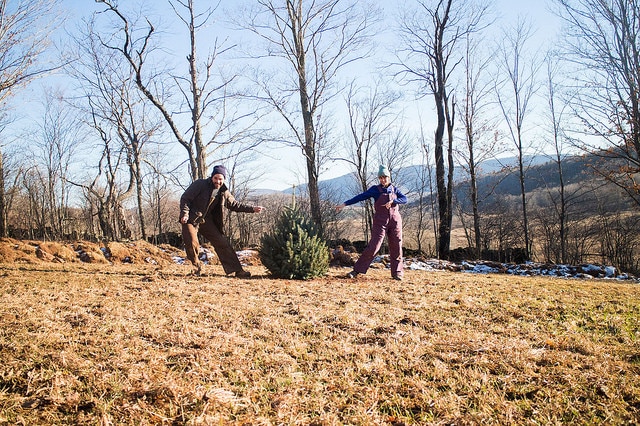
The day of the planting dawned crisp and clear. As we surveyed the chosen spot on our land, a sense of anticipation mixed with a touch of nervous excitement filled the air. The ground was our first challenge. While the very top layer of grass was somewhat frozen, a testament to the persistent Upstate chill, we were relieved to find the soil underneath surprisingly workable. This highlights an important tip for anyone considering a similar project: if you anticipate frozen ground, digging the hole in advance, perhaps in late fall, can save significant effort and ensure a smoother planting process when the time comes.
We carefully dug a hole that was wide enough to comfortably accommodate the tree's root ball, allowing ample space for its roots to spread and establish. Planting depth is equally critical; the tree needs to be planted at the same level it was growing in the nursery, with the root collar (where the trunk meets the roots) visible at ground level.
Once the tree was gently positioned, the next crucial step was watering. Matthew, with an impressive display of strength, truly "hulked up," carrying multiple buckets of water from a nearby stream all the way up the hill to quench our tree's initial thirst. This deep watering helps settle the soil around the roots and eliminates air pockets, which can dry out sensitive rootlets.
As our tree now stands proudly in its new home, a small pang of fear lingers – the worry that it might not make it through the harsh Upstate winter. But this fear is tempered by immense hope and the promise of new growth. We'll be diligently checking on him, especially as spring approaches, and will be sure to post an update on his progress. This single Colorado Blue Spruce is just the beginning. Our long-term vision includes planting a host of pine trees along the property's border in the spring, eventually replacing the less visually appealing deciduous trees that shed their leaves in winter. These new pine trees, we've decided, will be the "Brothers of our Christmas trees," forming a cohesive, evergreen family that will beautify our landscape for years to come.
As our Upstate Adventure continues to blossom with new projects and traditions, we're excited to share more of our journey. You can delve deeper into our preparations and subsequent planting efforts in
pm upstate adventure planting our christmas tree - Article 2, and explore the future growth of our family forest in
pm upstate adventure planting our christmas tree - Article 3.
Your Guide to a Successful Live Christmas Tree Planting Tradition
Inspired by our journey? Starting your own `pm upstate adventure planting our christmas tree` tradition is a rewarding endeavor. Here’s a comprehensive guide to help you give your living Christmas tree a second life:
- Source the Right Tree:
- Live with Root Ball: Crucially, you need a live tree with its entire root ball intact and protected, typically wrapped in burlap or in a container. Cut trees cannot be planted.
- Species Selection: Choose a species suitable for your local climate and soil conditions. Colorado Blue Spruce, Fraser Fir, and Douglas Fir are popular choices, but research what thrives in your USDA hardiness zone.
- Reputable Nursery/Farm: Purchase from a nursery or farm known for healthy, well-maintained stock. Inspect the tree for signs of disease, damage, or dryness.
- Indoor Care (Short & Sweet):
- Keep it Brief: Ideally, keep your live tree indoors for a maximum of 7-10 days. The longer it stays in a warm, dry indoor environment, the lower its chances of survival outdoors.
- Cool Location: Place the tree in the coolest part of your home, away from heat vents, fireplaces, or direct sunlight that might cause it to dry out quickly. Aim for temperatures below 68°F (20°C) if possible.
- Hydration is Key: Place the root ball in a large tub or bucket and ensure it remains consistently moist, but *never* waterlogged. Overwatering can lead to root rot. Check the soil moisture daily by sticking your finger about an inch or two into the soil; if it feels dry, water thoroughly.
- The Critical Hardening-Off Process:
- Gradual Acclimation: This is perhaps the most important step for success, especially in cold climates. Gradually introduce your tree to outdoor temperatures over several days to a week.
- Staged Exposure: Move the tree to an unheated garage, a sheltered porch, or a protected stairwell for 3-5 days. This allows it to slowly adjust to colder temperatures, reducing the shock when it moves fully outdoors.
- Monitor Conditions: During hardening off, continue to check soil moisture. Protect the tree from harsh winds or extreme cold snaps during this transition period.
- Site Selection & Hole Preparation:
- Choose Wisely: Select a planting site with adequate sunlight (most evergreens prefer full sun) and well-draining soil. Consider the tree’s mature size and ensure it won't interfere with structures or power lines.
- Dig in Advance: If you live in an area prone to frozen ground, dig your planting hole in late fall before the ground freezes solid. Cover the hole with a board or tarp to prevent it from refreezing.
- Proper Dimensions: Dig a hole that is 2-3 times wider than the root ball, but only as deep as the root ball. The root collar (where the trunk meets the roots) should be level with or slightly above the surrounding ground.
- Planting Your Tree:
- Remove Packaging: Carefully remove any burlap, twine, or container from the root ball. For burlap, you can typically leave the burlap under the root ball and cut it away from the top and sides, folding it into the bottom of the hole. Be gentle to avoid disturbing the roots.
- Positioning: Place the tree in the center of the hole, ensuring it's straight.
- Backfill & Water: Backfill the hole with the original soil, gently tamping it down to remove large air pockets. Water deeply and slowly to settle the soil around the roots.
- Mulch: Apply a 2-4 inch layer of organic mulch (like wood chips or pine needles) around the base of the tree, keeping it a few inches away from the trunk. This helps retain moisture, regulate soil temperature, and suppress weeds.
- Post-Planting Care:
- Consistent Watering: Continue to water your newly planted tree regularly, especially during dry periods, for the first year or two until it is well-established.
- Protection: Consider protecting young trees from deer or other wildlife that might browse on their needles or bark.
- Patience: It can take some time for a newly planted tree to show robust growth. Be patient, observe its health, and enjoy watching your new tradition grow!
Our `pm upstate adventure planting our christmas tree` has not only given a beautiful evergreen a second chance at life but has also woven a deeper layer of meaning into our holiday celebrations. It’s a tradition that fosters sustainability, connects us more intimately with our land, and promises a growing legacy of family memories, one vibrant tree at a time. We eagerly await the spring, hoping to see our Colorado Blue Spruce thrive, and look forward to expanding our family forest with even more evergreen brothers. May your own holiday traditions, whatever they may be, bring you as much joy and connection as this special adventure has brought us.